
How to Sleep Better During Perimenopause: Natural Sleep Tips for Women Over 45 USA
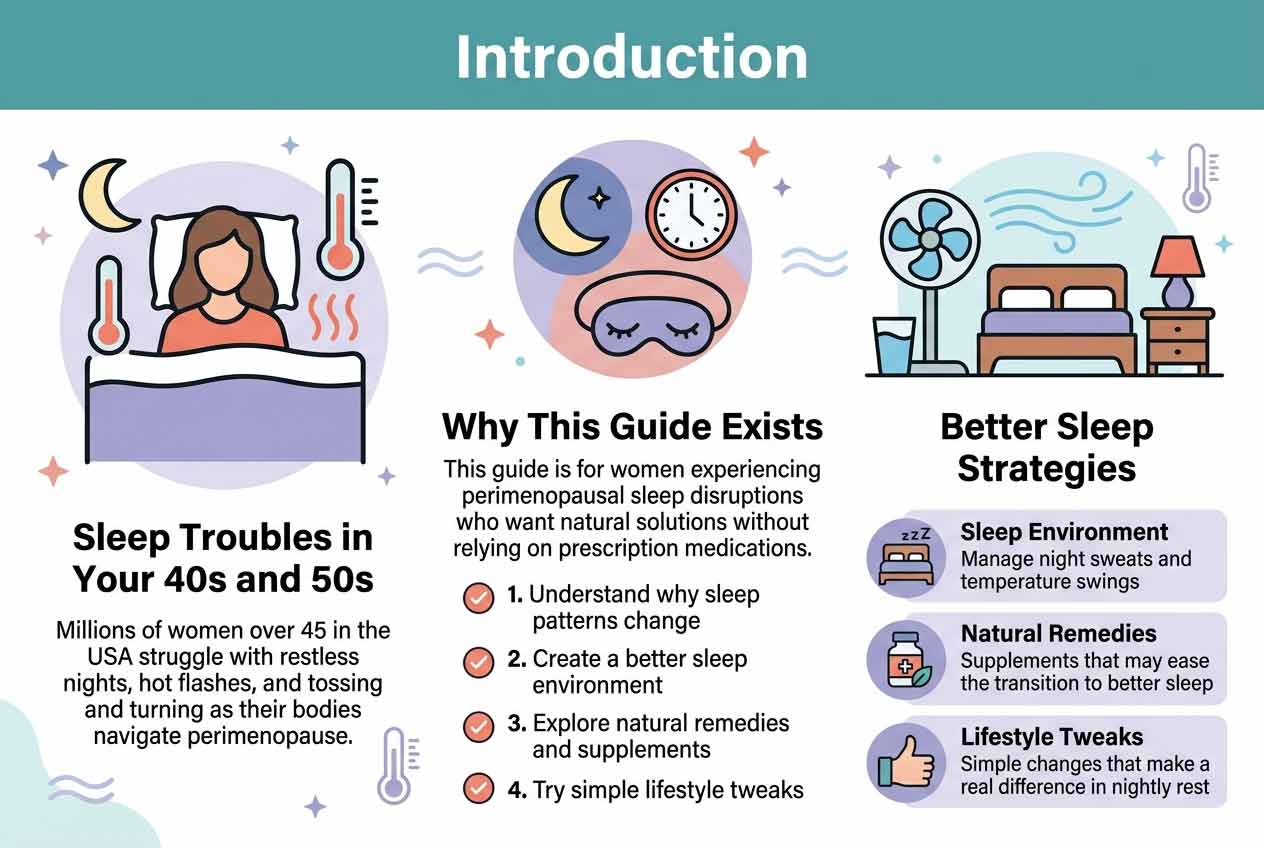
Sleep troubles hitting hard during your 40s and 50s? You’re not alone. Millions of women over 45 in the USA struggle with restless nights, hot flashes, and tossing and turning as their bodies navigate perimenopause.
This guide is for women experiencing perimenopausal sleep disruptions who want natural solutions without relying on prescription medications. We’ll explore why your sleep patterns change during this life stage and share proven strategies to help you get the rest you deserve.
You’ll discover how to create the perfect sleep environment for managing night sweats and temperature swings. We’ll also cover natural remedies and supplements that can ease your transition to better sleep, plus simple lifestyle tweaks that make a real difference in your nightly rest.
Understanding Perimenopause Sleep Disruptions
Hormonal changes affecting sleep quality
During perimenopause, your body experiences dramatic hormonal fluctuations that directly impact your sleep patterns. Estrogen and progesterone levels begin declining and fluctuating unpredictably, disrupting the natural sleep-wake cycle your body has relied on for years.
Estrogen plays a crucial role in regulating body temperature and supporting deep sleep phases. When estrogen drops, your body struggles to maintain consistent temperature regulation, leading to those unwelcome middle-of-the-night wake-ups. Progesterone acts as a natural sedative, promoting relaxation and deeper sleep. As progesterone levels decrease, many women find themselves lying awake with racing thoughts or feeling restless even when exhausted.
These hormonal shifts also affect melatonin production, your body’s primary sleep hormone. The timing and quantity of melatonin release becomes irregular, making it harder to fall asleep at your usual bedtime and maintain consistent sleep throughout the night.
Common sleep symptoms during perimenopause
Sleep disruptions during perimenopause manifest in several distinct patterns that many women experience:
Difficulty falling asleep: Your mind feels wired despite physical exhaustion
Frequent night wakings: Waking up multiple times without clear triggers
Early morning awakening: Consistently waking at 3 AM or 4 AM unable to return to sleep
Restless sleep: Tossing and turning throughout the night
Unrefreshing sleep: Waking up tired despite spending adequate time in bed
Insomnia episodes: Going days with minimal sleep during hormonal surges
Many women also report changes in sleep architecture – spending less time in deep, restorative sleep phases and more time in lighter sleep stages that leave them feeling unrested.
Hot flashes and night sweats impact
Hot flashes and night sweats represent some of the most disruptive sleep challenges during perimenopause. These sudden temperature spikes can jolt you awake, drenched in sweat and needing to change sleepwear or bedding.
Night sweats typically occur during REM sleep phases, interrupting your most restorative sleep cycles. The cooling down period after a hot flash can take 20-30 minutes, during which you’re fully awake and alert. Some women experience multiple episodes per night, creating a cycle of disrupted sleep that compounds over weeks and months.
The anticipatory anxiety about potential hot flashes can create additional sleep difficulties. Your body remains in a state of hypervigilance, making it challenging to relax into deep sleep even on nights when hot flashes don’t occur.
Anxiety and mood changes disrupting rest
Perimenopause brings emotional and psychological changes that significantly impact sleep quality. Hormonal fluctuations directly affect neurotransmitter production, including serotonin and GABA, which regulate mood and promote relaxation.
Many women experience increased anxiety levels, particularly around bedtime when daily distractions fade. Racing thoughts about work, family responsibilities, or health concerns become more prominent when trying to wind down. This hyperactive mental state makes it extremely difficult to transition into sleep mode.
Depression symptoms, including persistent sadness or feelings of hopelessness, can disrupt sleep patterns by either causing insomnia or excessive sleepiness. The relationship between mood changes and sleep disruption becomes cyclical – poor sleep worsens mood symptoms, which then further impair sleep quality.
Irritability and emotional sensitivity also increase during this phase, making it harder to brush off daily stressors that might interfere with evening relaxation routines.
Creating Your Optimal Sleep Environment
Temperature control strategies for hot flash relief
Hot flashes can turn your bedroom into an uncomfortable furnace, leaving you tossing and turning all night. The key is keeping your room consistently cool, ideally between 60-67°F (15-19°C). This temperature range helps your body naturally drop its core temperature, signaling it’s time for sleep.
Invest in a programmable thermostat that can automatically lower temperatures before bedtime. If central air conditioning isn’t an option, consider a high-quality bedroom fan or portable air conditioning unit. Ceiling fans work wonders too, creating a gentle breeze that helps evaporate moisture from hot flashes.
Keep a small bedside fan within reach for those middle-of-the-night hot flash emergencies. Many women find that cooling gel pads placed under their pillow provide instant relief. You can also try cooling mattress toppers that use gel-infused memory foam or breathable latex materials.
Layer your bedding so you can easily adjust throughout the night. Start with lightweight sheets and add or remove blankets as needed. Some women keep a spray bottle with cool water nearby for quick relief during intense hot flashes.
Breathable bedding and sleepwear choices
Your fabric choices can make or break your sleep quality during perimenopause. Natural fibers like cotton, bamboo, and linen excel at wicking moisture away from your skin and allowing air circulation. Bamboo sheets are particularly popular because they’re naturally temperature-regulating and incredibly soft.
Avoid synthetic materials like polyester and fleece, which trap heat and moisture against your skin. Instead, look for percale cotton sheets with a loose weave that promotes airflow. Thread counts between 200-400 offer the best balance of comfort and breathability.
For sleepwear, choose loose-fitting pajamas made from moisture-wicking fabrics. Many companies now make sleepwear specifically designed for menopausal women, featuring cooling technology and seamless construction. Cotton nightgowns or lightweight cotton pajama sets work well for most women.
Consider moisture-wicking pillowcases that help keep your head and neck cool throughout the night. Some women find that silk pillowcases, while not as breathable as cotton, feel cooler against the skin and reduce friction that can cause hair tangling.
Bedroom lighting adjustments for better melatonin production
Light exposure directly impacts your body’s production of melatonin, the hormone that regulates sleep cycles. During perimenopause, melatonin production naturally declines, making proper lighting even more critical for quality sleep.
Install blackout curtains or shades to block outside light sources like streetlights or early morning sun. Even small amounts of light can disrupt melatonin production. If complete darkness feels uncomfortable, use a dim red night light, as red light has minimal impact on melatonin.
Remove or cover electronic devices that emit blue light, including alarm clocks with bright displays, phone chargers with LED indicators, and any standby lights on electronics. Blue light is particularly disruptive to sleep hormones.
During the evening hours before bed, dim your bedroom lights gradually to signal to your brain that sleep time is approaching. Use warm-toned bulbs (2700K or lower) in bedside lamps instead of bright overhead lighting. Salt lamps provide a gentle, amber glow that many women find soothing.
Consider wearing blue light blocking glasses if you must use devices in the evening, though it’s best to avoid screens altogether for at least an hour before bedtime.
Natural Remedies and Supplements for Better Sleep
Herbal teas and calming botanicals
Chamomile stands as one of the most trusted herbal allies for perimenopausal women struggling with sleep. This gentle flower contains apigenin, a compound that binds to brain receptors responsible for reducing anxiety and promoting drowsiness. Brewing a cup of chamomile tea 30-60 minutes before bed creates a calming ritual while delivering natural sedative effects.
Valerian root offers stronger sleep-inducing properties and has been used for centuries to combat insomnia. The root’s valerenic acid works similarly to prescription sleep aids by increasing GABA levels in the brain. Start with a lower dose, as some women find valerian energizing rather than calming.
Passionflower particularly benefits women experiencing racing thoughts at bedtime. This beautiful climbing vine reduces cortisol levels and promotes alpha brain waves associated with relaxation. Combine it with lemon balm for an extra dose of calm, as this mint family member helps regulate temperature fluctuations common during perimenopause.
Magnolia bark contains honokiol and magnolol, compounds that naturally boost GABA activity without creating dependency. This traditional Chinese remedy works especially well for women whose sleep issues stem from stress and anxiety.
Holy basil, also known as tulsi, helps regulate cortisol patterns that often become disrupted during hormonal transitions. Unlike regular basil, this adaptogenic herb supports healthy stress responses while promoting restful sleep.
Magnesium and melatonin supplementation
Magnesium deficiency affects nearly 80% of American women, and this mineral becomes even more critical during perimenopause. The body requires magnesium for over 300 enzymatic reactions, including those that regulate sleep cycles and muscle relaxation. Magnesium glycinate proves most effective for sleep support because it’s highly absorbable and less likely to cause digestive upset.
Start with 200-400mg of magnesium glycinate taken 1-2 hours before bed. This form crosses the blood-brain barrier efficiently and helps activate the parasympathetic nervous system, preparing your body for rest. Avoid magnesium oxide, which acts primarily as a laxative and provides minimal sleep benefits.
Melatonin production naturally declines with age and hormonal changes, making supplementation valuable for many perimenopausal women. However, more isn’t always better with melatonin. Research shows that doses between 0.5-3mg work most effectively for sleep initiation. Higher doses can actually worsen sleep quality and cause grogginess the next day.
Time-released melatonin formulations help women who fall asleep easily but wake frequently throughout the night. These supplements provide a steady release of melatonin for 6-8 hours, mimicking the body’s natural production pattern.
Consider cycling melatonin supplementation rather than taking it nightly long-term. Use it for 2-3 weeks, then take a break to prevent your body from reducing its natural production.
Essential oils for relaxation and sleep induction
Lavender essential oil has been extensively studied for its sleep-promoting properties, with research showing it can increase deep sleep by up to 20%. The linalool and linalyl acetate compounds in lavender directly affect the nervous system, reducing heart rate and blood pressure while promoting relaxation.
Apply 2-3 drops of high-quality lavender oil to your pillowcase or diffuse it in your bedroom 30 minutes before sleep. For direct application, dilute lavender oil with a carrier oil like jojoba or sweet almond oil and massage into your temples, wrists, or the soles of your feet.
Roman chamomile essential oil offers different benefits than chamomile tea, providing more concentrated relaxation effects. This oil contains esters that have anti-anxiety and sedative properties. Blend it with lavender for a powerful sleep-inducing combination.
Bergamot essential oil uniquely balances mood while promoting sleep. Unlike other citrus oils that tend to be energizing, bergamot contains linalool and linalyl acetate, making it ideal for women whose sleep issues stem from stress or mood fluctuations common during perimenopause.
Cedarwood essential oil grounds the nervous system and promotes the production of melatonin. Its warm, woody scent creates a sense of security and calm that many women find comforting during the uncertainty of hormonal changes.
Ylang-ylang helps regulate heart rate and blood pressure, both of which can be elevated during perimenopause due to hormonal fluctuations and stress.
Calcium and vitamin D for sleep support
The relationship between calcium, vitamin D, and sleep quality becomes particularly important during perimenopause as bone density concerns increase and nutrient absorption changes. Calcium plays a direct role in melatonin production, with research showing that calcium deficiency can disrupt normal sleep cycles.
Calcium works synergistically with magnesium to promote muscle relaxation and nervous system calm. The ideal ratio is approximately 2:1 calcium to magnesium, though many Americans get plenty of calcium through diet and may benefit from emphasizing magnesium supplementation instead.
Vitamin D deficiency affects sleep quality and duration, with studies linking low vitamin D levels to increased sleep disturbances and daytime fatigue. During perimenopause, declining estrogen levels can affect vitamin D metabolism, making supplementation more important.
Most perimenopausal women benefit from 1000-2000 IU of vitamin D3 daily, though individual needs vary based on sun exposure, skin tone, and current blood levels. Vitamin D testing can help determine optimal dosing.
Take calcium and vitamin D supplements with food to improve absorption, and separate them from iron supplements by at least two hours to prevent mineral competition. Evening supplementation of calcium can support natural melatonin production, making it ideal timing for sleep support.
The combination of calcium, magnesium, and vitamin D also supports bone health during the rapid bone loss that can occur in early perimenopause, addressing multiple health concerns simultaneously.
Lifestyle Changes That Improve Sleep Quality
Exercise Timing and Types for Better Rest
Working out during perimenopause can dramatically improve your sleep quality, but timing and exercise type matter more than you might think. Morning or afternoon workouts work best for sleep – aim to finish any intense exercise at least 4-6 hours before bedtime. Your body needs time to cool down and for stress hormones like cortisol to return to normal levels.
Low-impact activities shine during this life stage. Walking, swimming, yoga, and gentle strength training help regulate hormones without overstressing your system. Yoga deserves special mention – poses like legs-up-the-wall and child’s pose activate your parasympathetic nervous system, signaling your body to relax.
Strength training twice weekly helps combat muscle loss that accelerates during perimenopause while improving insulin sensitivity. This matters because blood sugar spikes can wake you up at night. Keep evening workouts light – think gentle stretching or restorative yoga rather than high-intensity interval training.
| Best Exercise Times | Activity Type | Sleep Benefit |
|---|---|---|
| 6-8 AM | Cardio/Strength | Regulates circadian rhythm |
| 10 AM-2 PM | High-intensity | Burns energy without affecting sleep |
| 5-7 PM | Moderate activity | Helps with stress relief |
| 8-9 PM | Gentle yoga/stretching | Prepares body for rest |
Stress Management Techniques for Evening Calm
Your nervous system needs intentional winding down during perimenopause. Fluctuating hormones already put your stress response on high alert, so evening relaxation techniques become essential rather than optional.
Progressive muscle relaxation works wonders – start at your toes and slowly tense then release each muscle group up to your head. This physical practice tells your brain it’s safe to sleep. Deep breathing exercises activate your vagus nerve, switching you from fight-or-flight to rest-and-digest mode.
Journaling for 10-15 minutes before bed helps process the day’s worries. Try the “brain dump” method – write everything on your mind without editing or organizing. This prevents those 3 AM racing thoughts that plague many perimenopausal women.
Create boundaries around evening screen time. Blue light suppresses melatonin production, which already decreases during perimenopause. Set phones to “do not disturb” mode after 8 PM and keep devices out of the bedroom entirely.
Meditation apps designed for sleep can guide you through body scans or visualization exercises. Even five minutes of mindfulness practice can lower cortisol levels and prepare your mind for rest.
Dietary Adjustments to Reduce Sleep Disruptions
What you eat and when you eat it directly impacts your sleep quality during perimenopause. Hot flashes and night sweats often connect to blood sugar fluctuations, making steady glucose levels your sleep ally.
Stop eating large meals 3-4 hours before bedtime. Heavy foods require energy to digest, keeping your internal temperature elevated when you need it to drop for quality sleep. If you’re hungry before bed, choose a small snack that combines protein and complex carbs – think apple slices with almond butter or Greek yogurt with berries.
Caffeine sensitivity increases during perimenopause, so your afternoon coffee habit might need adjustment. Cut off caffeine by 2 PM, or earlier if you’re particularly sensitive. Remember that chocolate, tea, and some medications contain caffeine too.
Alcohol might seem like it helps you fall asleep, but it disrupts sleep cycles later in the night. Even one glass of wine can trigger hot flashes and fragment your sleep. If you choose to drink, do it earlier in the evening and always with food.
Magnesium-rich foods support better sleep naturally. Add pumpkin seeds, dark leafy greens, and avocados to your dinner rotation. These foods help relax muscles and calm your nervous system without supplements.
Stay hydrated throughout the day but taper off fluids 2-3 hours before bed to minimize bathroom trips that interrupt sleep. Night sweats already disrupt rest enough without adding frequent wake-ups.
Establishing a Perimenopause-Friendly Bedtime Routine
Wind-down activities that promote relaxation
Creating a calming pre-sleep ritual becomes especially important during perimenopause when anxiety and racing thoughts often peak at bedtime. Start your wind-down routine 60-90 minutes before sleep with gentle activities that signal to your body it’s time to rest.
Deep breathing exercises work particularly well for perimenopausal women dealing with hot flashes and stress. Try the 4-7-8 technique: inhale for 4 counts, hold for 7, and exhale for 8. This activates your parasympathetic nervous system and can help cool your core temperature naturally.
Gentle stretching or restorative yoga poses like child’s pose, legs-up-the-wall, or gentle spinal twists release physical tension while calming your mind. These movements also help counteract the stiffness that often accompanies hormonal changes.
Reading a physical book, journaling your thoughts, or practicing gratitude can redirect anxious energy into peaceful reflection. Many women find that writing down tomorrow’s tasks helps quiet the mental chatter that keeps them awake.
A warm bath with Epsom salts or lavender oil can ease muscle tension and temporarily raise your body temperature. The subsequent cooling effect mimics your natural circadian temperature drop, promoting sleepiness.
Technology boundaries for improved sleep hygiene
Blue light from screens disrupts melatonin production, which is already declining during perimenopause. Establish a digital sunset by powering down all screens at least one hour before bedtime. This includes phones, tablets, TVs, and e-readers.
Create a charging station outside your bedroom to remove the temptation of late-night scrolling. The electromagnetic fields from devices can also interfere with sleep quality, so keeping them at a distance supports deeper rest.
If you must use devices in the evening, invest in blue light filtering glasses or use built-in night mode settings. However, complete avoidance remains the gold standard for optimal sleep hygiene.
Replace evening screen time with analog activities like puzzles, coloring books, or gentle music. These alternatives provide entertainment without the stimulating effects of digital content.
Consider using a traditional alarm clock instead of your phone to eliminate the need for devices in your sleep space entirely.
Consistent sleep schedule despite hormonal fluctuations
Maintaining regular sleep and wake times helps stabilize your circadian rhythm even when hormones are unpredictable. Go to bed and wake up at the same time every day, including weekends, even if sleep quality varies.
Your changing hormone levels might make you feel sleepy earlier or later than usual. Honor these shifts while maintaining your target sleep window. If perimenopause makes you naturally tired at 9 PM instead of 11 PM, adjust your entire schedule accordingly rather than fighting it.
When hot flashes or night sweats disrupt your sleep, resist the urge to sleep in or take long daytime naps. Brief 20-minute power naps before 3 PM are acceptable, but longer rest periods can throw off your nighttime sleep drive.
Track your sleep patterns in a journal to identify trends and optimal timing. Notice which nights you sleep best and what factors contributed to that success.
Morning light exposure for circadian rhythm balance
Getting bright light exposure within the first hour of waking helps reset your internal clock and supports healthy melatonin production later in the evening. This becomes even more critical during perimenopause when circadian rhythms often shift.
Spend 15-30 minutes outside in natural sunlight, even on cloudy days. If weather doesn’t permit, sit near a large window or consider a light therapy box designed for circadian support.
Morning light exposure also helps regulate cortisol levels, which tend to become erratic during perimenopause. This supports both sleep quality and daytime energy levels.
Combine light exposure with gentle movement like walking or stretching to amplify the circadian benefits. This morning ritual sets a positive tone for the entire day and improves your body’s ability to wind down naturally in the evening.
Even five minutes of morning sunlight is better than none, so start small and build this habit gradually into your routine.
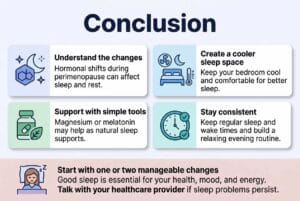
Sleep challenges during perimenopause don’t have to define your nights. By understanding how hormonal changes affect your rest and making targeted adjustments to your environment, daily habits, and bedtime routine, you can reclaim the quality sleep your body needs. Simple changes like keeping your bedroom cool, adding natural supplements like magnesium or melatonin, and sticking to consistent sleep and wake times can make a real difference in how you feel each morning.
Your sleep matters more than ever during this life stage, and you have more control over it than you might think. Start with one or two changes that feel manageable – maybe creating a cooler sleep space or adding a relaxing evening routine – and build from there. Good sleep isn’t a luxury during perimenopause; it’s essential for your health, mood, and energy. Give yourself permission to prioritize rest, and don’t hesitate to talk with your healthcare provider if sleep problems persist despite these natural approaches.