
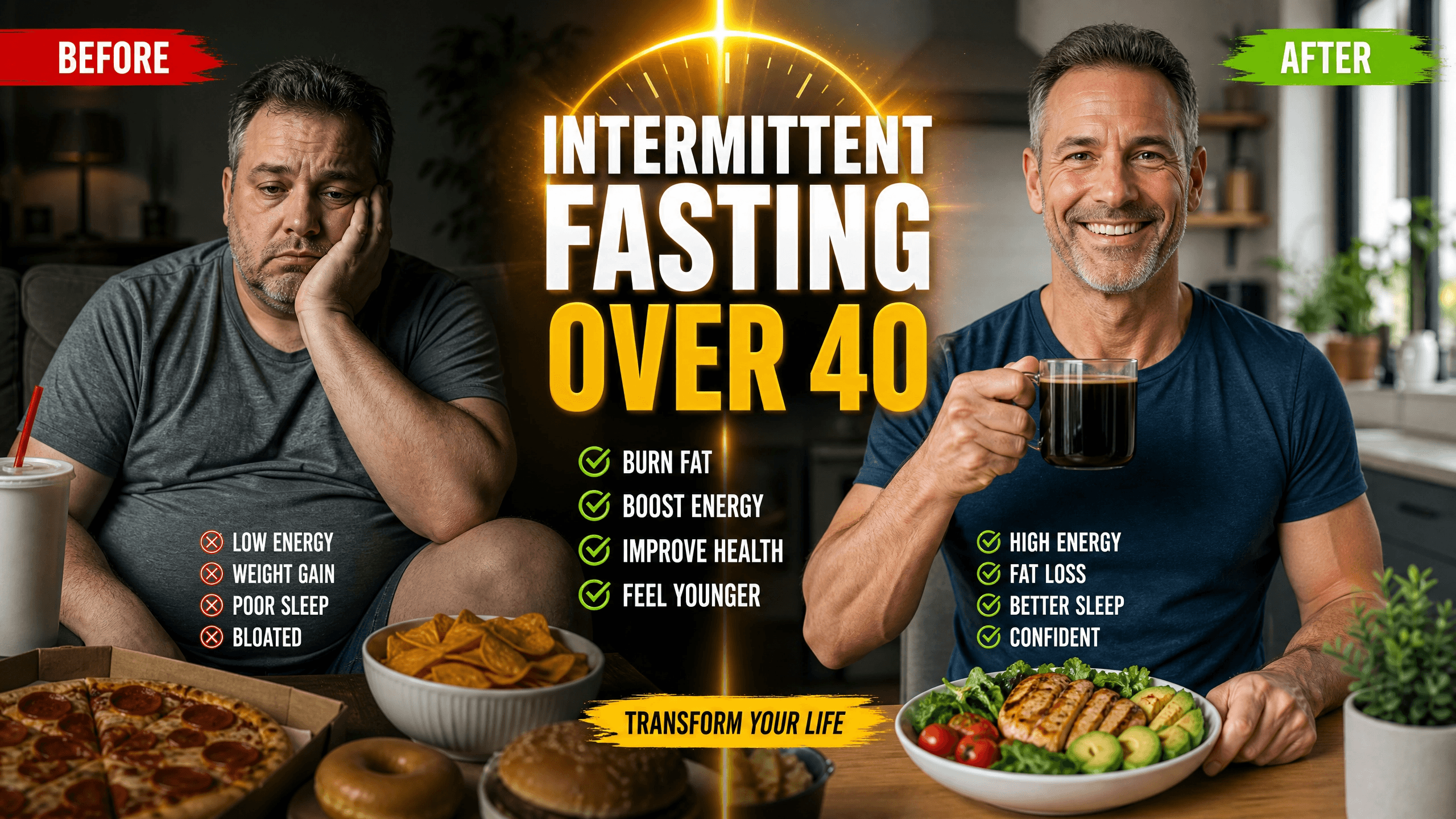

Intermittent Fasting for Beginners Over 40: The Complete USA Guide (2026)
Intermittent fasting has become one of the most talked-about health strategies in America — and for good reason. But if you’re over 40 and haven’t tried it yet, you may be wondering: Is intermittent fasting right for me at my age? Where do I even start? And what’s different about fasting after 40?
The answers are encouraging. Research consistently shows that adults over 40 can be among the greatest beneficiaries of intermittent fasting — particularly for weight loss, metabolic health, insulin sensitivity, and inflammation reduction. These are the very health challenges that tend to intensify after 40, when metabolism naturally slows, hormones shift, and belly fat becomes increasingly stubborn.
This guide is built specifically for you: the American adult over 40 who is curious about intermittent fasting, has no previous fasting experience, and wants to understand the science, start safely, avoid common mistakes, and see real results. By the end, you’ll have a complete starter plan — including schedules, meal ideas, and expert-backed tips — tailored to your body at this stage of life.

| 📌 2026 Trend Watch: Intermittent fasting remains one of the top-searched diet strategies in the United States, with over 8 million monthly Google searches. In 2025, the International Society of Sports Nutrition updated its position statement, reaffirming that IF is safe and effective for healthy adults of all ages when implemented correctly. |
What Is Intermittent Fasting? The Science in Plain English
Intermittent fasting (IF) is not a diet in the traditional sense. It doesn’t prescribe what you eat — it prescribes when you eat. IF is an eating pattern that cycles between defined periods of fasting (no or minimal caloric intake) and eating windows. The underlying principle is simple: by extending the natural overnight fast, you give your body more time in a fasted metabolic state — and that state unlocks a cascade of health benefits.
Here’s what happens in your body during a fast, hour by hour:
- Hours 0–4: Blood glucose and insulin levels decline after your last meal. Digestion completes.
- Hours 4–8: Liver glycogen (stored glucose) begins depleting. Insulin drops further, signaling the body to shift fuel sources.
- Hours 8–12: Glycogen stores become depleted. The body begins mobilizing stored fat as a primary fuel source through a process called lipolysis. This is the fat-burning window.
- Hours 12–16: Fat oxidation accelerates. Growth hormone begins rising, protecting muscle mass. Ketone production begins, providing clean fuel for the brain.
- Hours 16–18: Autophagy — the cellular self-cleaning process — activates significantly. Old, damaged cell components are broken down and recycled. This is a key anti-aging mechanism.
- Hours 18–24+: Deeper ketosis. Heightened autophagy. AMPK (the body’s metabolic master switch) is fully activated, promoting cellular repair and energy efficiency.
Most IF protocols for beginners target the 12–16 hour fasting window, which captures the fat-burning and early autophagy benefits while remaining highly sustainable for everyday American life.
| 🔬 Key Mechanism: Insulin is the gatekeeper to fat storage. When insulin is elevated — which happens every time you eat — fat burning is inhibited. By extending the fasting period, IF keeps insulin low for longer, allowing the body to access and burn stored fat more effectively than continuous grazing or frequent meals. |
Why Intermittent Fasting Is Especially Powerful After 40
Forty is not just a number — it represents a significant biological inflection point for both men and women. Several metabolic and hormonal shifts that begin in the 40s make IF particularly well-suited to this age group.
1. Slowing Metabolism
Resting metabolic rate (RMR) declines approximately 1–2% per decade after age 20, accelerating somewhat after 40. This means the calorie budget for maintaining weight shrinks without any change in behavior. Intermittent fasting addresses this not by further reducing calories per se, but by improving metabolic flexibility — the body’s ability to efficiently switch between burning glucose and fat. A 2022 study in Cell Metabolism found that IF improved metabolic flexibility in middle-aged adults independently of caloric restriction.
2. Insulin Resistance and Blood Sugar
Insulin sensitivity naturally declines with age, increasing the risk of prediabetes and type 2 diabetes — conditions affecting over 130 million Americans. IF is one of the most effective non-pharmacological tools for restoring insulin sensitivity. Research published in Obesity Reviews found that IF protocols reduced fasting insulin by 20–31% and fasting blood glucose by 3–6% — effects comparable to metformin (a first-line diabetes medication) in some studies.
3. Hormonal Changes
For women over 40 navigating perimenopause, IF can help manage weight gain driven by declining estrogen, improve sleep quality, and reduce inflammation. However, women are more sensitive to hormonal disruption from aggressive fasting — a critical nuance addressed in the protocols section.
For men over 40, IF supports natural testosterone levels indirectly by reducing body fat (which converts testosterone to estrogen via the aromatase enzyme) and improving insulin sensitivity (which is positively associated with T levels).
4. Visceral Fat — The Most Dangerous Fat
After 40, fat accumulation shifts toward the abdomen — specifically visceral fat, which surrounds internal organs and drives systemic inflammation, heart disease, and metabolic dysfunction. IF disproportionately targets visceral fat. A 2020 meta-analysis in Obesity Reviews found that IF protocols reduced visceral fat mass by 4–7% — greater than the reductions achieved by equivalent caloric restriction with continuous eating patterns.
5. Autophagy and Cellular Longevity
After 40, cellular aging accelerates — damaged proteins accumulate, mitochondria become less efficient, and inflammatory ‘zombie cells’ (senescent cells) multiply. Autophagy — stimulated by fasting — clears this cellular debris. Nobel Prize-winning researcher Dr. Yoshinori Ohsumi’s foundational work on autophagy has spurred an explosion of research into fasting as an anti-aging intervention. While the full clinical picture is still emerging, the mechanistic evidence is compelling and consistent.
Intermittent Fasting Methods Compared: Which Is Right for You Over 40?
There is no single ‘best’ IF protocol — the right one is the one you can sustain. The table below compares the main approaches, ranked from most beginner-friendly to most advanced.
| Method | Eating Window | Fasting Period | Best For | Difficulty |
| 16:8 | 8 hours | 16 hours | Beginners — most sustainable | ⭐⭐ Easy |
| 14:10 | 10 hours | 14 hours | Women over 40 / sensitive hormones | ⭐ Very Easy |
| 5:2 Diet | Normal x5 days | 500–600 cal x2 days | Those who prefer daily eating | ⭐⭐⭐ Moderate |
| 18:6 | 6 hours | 18 hours | Intermediate — after 4–6 weeks of 16:8 | ⭐⭐⭐ Moderate |
| OMAD | 1 hour / 1 meal | 23 hours | Advanced / experienced fasters only | ⭐⭐⭐⭐⭐ Hard |
| Alternate Day | Normal / alternate | 24 hours every other day | Accelerated fat loss goals | ⭐⭐⭐⭐ Hard |
| ✅ Our Recommendation for Beginners Over 40: Start with 14:10 for the first 2 weeks (stop eating by 8 PM, eat again at 10 AM). This is gentle enough to avoid hormonal disruption, especially important for women. Then transition to 16:8 (noon to 8 PM eating window) after you’re comfortable. Most people find 16:8 sweet-spot for results vs. sustainability. |
How to Start Intermittent Fasting After 40: A Step-by-Step Plan
Week 1–2: The Gentle Entry (12:12 or 14:10)
Your first objective is not fat burning — it’s adaptation. Your body has been conditioned for decades to receive food throughout the day. Changing that pattern takes time, and doing it too aggressively triggers stress responses that undermine the process.
- Set your eating window: If you wake at 7 AM and sleep at 10 PM, try eating from 9 AM to 9 PM (12:12), then shift to 10 AM to 8 PM (14:10) by day 4.
- Stop eating 2–3 hours before bed: This alone is a significant change for most Americans and produces meaningful metabolic benefits within days.
- Stay hydrated during the fast: Water, black coffee, plain green or herbal tea, and sparkling water are all fasting-safe and help manage hunger. Coffee, in particular, suppresses appetite and enhances fat oxidation during the fast.
- Do not restrict calories yet: Let your body adapt to the eating schedule before worrying about what you eat. Caloric restriction while adapting to IF doubles the stress load and leads to abandonment within days for most beginners.
- Expect some hunger at ‘old meal times’: This is conditioned hunger — your body expecting food based on habit, not actual physiological need. It passes within 20–30 minutes and diminishes within 5–10 days.
Week 3–4: Move to 16:8
Once the 14:10 window feels comfortable and you’re no longer experiencing significant hunger or mood disruption during the fast, it’s time to move to the gold standard beginner protocol: 16:8.
- Eating window: 12:00 PM to 8:00 PM is the most popular window for American lifestyles — it allows for a social lunch, an afternoon snack if needed, and a family dinner, while skipping breakfast.
- Break your fast with protein and healthy fat: Eggs, avocado, Greek yogurt, cottage cheese, or a protein shake help stabilize blood sugar and prevent the blood glucose spike that leads to energy crashes.
- Prioritize protein at every meal: After 40, protein requirements increase to preserve muscle mass, which naturally declines (sarcopenia). Aim for 0.7–1.0 gram of protein per pound of body weight, distributed across your eating window.
- Continue with water, black coffee, and plain teas during the fasting window.
- Light to moderate exercise during the fast is acceptable and may enhance fat burning — but save intense workouts for within your eating window, especially in the early weeks.
Month 2 and Beyond: Optimize and Personalize
By week 5–8, most people over 40 who have committed to 16:8 report stable energy levels, reduced hunger, noticeable changes in body composition, and improved mental clarity. This is when IF transitions from a practice to a lifestyle.
- Experiment with your eating window: Some people thrive on 10 AM–6 PM (earlier window, better sleep quality). Others prefer 1 PM–9 PM to accommodate social dinners.
- Try 18:6 or 5:2 for a plateau-breaking boost: If progress stalls after 6–8 weeks, extending the fasting window 2 days per week or trying 5:2 can reinvigorate metabolic benefits.
- Track non-scale victories: Energy levels, sleep quality, blood pressure, blood sugar, mood, and cognitive clarity are all measurable — and often improve before the scale moves significantly.
- Get lab work at 3 months: Ask your doctor to check fasting glucose, insulin, HbA1c, cholesterol panel, and CRP (inflammatory marker). Seeing objective improvement in these numbers is one of the most motivating experiences in your IF journey.
Sample 16:8 Meal Plan for Adults Over 40 — One Full Week
The following 7-day meal plan is designed for a 16:8 protocol (12 PM – 8 PM eating window), emphasizing high protein, anti-inflammatory foods, and hormone-supporting nutrients. Caloric intake is naturally moderate — typically 1,600–2,000 calories depending on portion sizes.
| Day | Meal 1 (Breakfast) | Snack | |
| Monday | 12:00 PM Grilled salmon, quinoa, roasted broccoli + olive oil | Greek yogurt + almonds | 6:00 PM Chicken stir-fry with vegetables + brown rice |
| Tuesday | 12:00 PM Turkey & avocado wrap, side salad | Apple + 2 tbsp almond butter | 7:00 PM Baked cod, sweet potato, steamed spinach |
| Wednesday | 1:00 PM Lentil soup + 2 slices sourdough | Handful mixed nuts + berries | 7:00 PM Grass-fed beef burger (lettuce wrap) + roasted veggies |
| Thursday | 12:00 PM Egg & veggie scramble + whole grain toast | Celery sticks + hummus | 6:30 PM Shrimp tacos, cabbage slaw, black beans |
| Friday | 12:30 PM Big green salad + grilled chicken, olive oil dressing | Cottage cheese + pineapple | 7:00 PM Pork tenderloin + roasted asparagus + wild rice |
| Saturday | 11:00 AM Smoothie bowl: protein powder, banana, berries, chia seeds | String cheese + apple | 6:00 PM Homemade pizza on whole wheat crust + side salad |
| Sunday | 12:00 PM Veggie omelette + avocado + fruit | Dark chocolate + walnuts | 6:00 PM Roast chicken + mashed cauliflower + green beans |
| 🍽️ Meal Plan Notes: These are templates, not rigid prescriptions. Adjust portions to your hunger and activity level. During the fasting window (8 PM – 12 PM), drink water, black coffee, or plain herbal tea only. No cream, milk, or sweeteners during the fast — they trigger an insulin response and break the fast. |
Science-Backed Benefits of Intermittent Fasting Over 40
The research base supporting IF’s benefits has expanded significantly in the last five years. Here is a summary of the key evidence-based outcomes most relevant to adults over 40 in the USA:
| Benefit | What the Research Shows | Timescale |
| Weight & Fat Loss | Average 0.5–1% body weight lost per week; visceral fat disproportionately targeted | 2–8 weeks |
| Insulin Sensitivity | Fasting lowers fasting insulin by 20–30%; reduces T2 diabetes risk | 2–4 weeks |
| Autophagy Activation | Cellular ‘cleaning’ process kicks in after ~16–18 hours of fasting | Daily with 16:8+ |
| Improved Blood Pressure | Systolic BP reduced 3–8 mmHg in multiple controlled trials | 4–8 weeks |
| Reduced Inflammation | Lower CRP and inflammatory cytokines; may slow disease progression | 4–12 weeks |
| Cognitive Clarity | BDNF increase supports brain cell growth; improved focus reported | 2–6 weeks |
| Better Cholesterol Profile | LDL reduced, HDL improved; triglycerides drop significantly | 6–12 weeks |
| Longevity Pathways | Activates AMPK and inhibits mTOR — pathways linked to extended healthspan | Cumulative |
7 Beginner Mistakes to Avoid After 40
Mistake 1: Starting Too Aggressively
Jumping straight into OMAD or 18:6 when you’ve never fasted before overwhelms your body and almost guarantees failure within 10 days. Start with 14:10 and earn your way to longer fasts. Sustainable beats optimal every time.
Mistake 2: Not Eating Enough Protein
After 40, muscle preservation requires intentional effort. Under-eating protein during your eating window — common when you’re eating fewer meals — accelerates muscle loss, slows metabolism, and undermines your results. Target 30–40 grams of protein per meal.
Mistake 3: Breaking Your Fast with Refined Carbs or Sugar
After 16 hours of fasting, your body is insulin-sensitive — meaning even a small amount of rapidly digested carbohydrates (white bread, juice, pastries) will cause a large blood sugar spike followed by a crash. Break your fast with protein and healthy fat first, then add complex carbs if desired.
Mistake 4: Drinking Caloric Beverages During the Fast
Cream in your coffee, a ‘just a little’ splash of juice, flavored sparkling waters with sugar — any caloric intake during the fasting window triggers an insulin response and compromises the metabolic benefits of fasting. Black coffee, plain tea, and water only.
Mistake 5: Women Over 40 Fasting Too Hard, Too Fast
Women’s hormonal systems — particularly the hypothalamic-pituitary-ovarian (HPO) axis — are sensitive to perceived caloric scarcity. Aggressive fasting can disrupt cortisol rhythms, worsen perimenopausal symptoms, and trigger hormonal chaos. Women over 40 should start with 14:10, not 16:8, and listen carefully to how their body responds. If symptoms worsen, ease back.
Mistake 6: Ignoring Hunger Signals vs. Habitual Hunger
Learning to distinguish true physiological hunger from conditioned or emotional hunger is a skill that takes 2–3 weeks to develop. True hunger builds gradually and can be satisfied with any food. Conditioned hunger spikes suddenly at ‘meal times’ and passes within 20–30 minutes if you stay hydrated and occupied.
Mistake 7: Expecting Instant Results
Intermittent fasting produces metabolic changes quickly — often within 48–72 hours — but visible body composition changes typically take 4–6 weeks of consistent practice. Weight on the scale may temporarily stall or even rise slightly in weeks 1–2 as water retention fluctuates. Stay the course and measure progress by how you feel, not just how you look.
Who Should NOT Try Intermittent Fasting Without Medical Supervision
Intermittent fasting is safe for most healthy adults over 40, but it is not appropriate for everyone. Always consult a healthcare provider before starting IF if you have any of the following:
- Type 1 diabetes or insulin-dependent type 2 diabetes — fasting can cause dangerous hypoglycemia
- History of eating disorders (anorexia, bulimia, binge eating disorder) — restrictive eating patterns can trigger relapse
- Pregnancy or breastfeeding — increased caloric and nutritional needs make fasting inappropriate
- Adrenal insufficiency or cortisol disorders — fasting dramatically affects cortisol rhythm
- Active cancer treatment — nutritional needs are elevated and altered fasting patterns may interfere
- Underweight (BMI under 18.5) — caloric restriction is contraindicated
- Current use of medications that require food intake (certain diabetes medications, blood thinners, NSAIDs)
| ⚠️ Medication Timing Alert: If you take medications with food — especially blood pressure drugs, metformin, or blood thinners — talk to your doctor before changing your eating schedule. The timing of medication relative to food can significantly affect absorption and safety. Do not simply skip a dose because you are in a fasting window. |
Frequently Asked Questions — Intermittent Fasting After 40
Q: Will intermittent fasting slow my metabolism? No — the opposite is true for most people. Short-term fasting of 24 hours or less has been shown to increase metabolic rate by 3.6–14% through norepinephrine release. Metabolic slowing is associated with severe, prolonged caloric restriction — not intermittent fasting.
Q: Can I exercise while fasting? Yes, and many people find fasted cardio (light to moderate exercise in the fasting window) enhances fat burning. However, for high-intensity strength training or cardio over 40 minutes, eating beforehand is generally recommended — especially for adults over 40, where muscle preservation is a priority. Experiment and listen to your body.
Q: Does black coffee break a fast? No. Black coffee contains no calories and does not trigger an insulin response. In fact, caffeine enhances fat oxidation and may amplify some fasting benefits. However, adding cream, milk, sugar, or flavored syrups does break the fast.
Q: How long before I see results from IF? Most people notice improved energy and mental clarity within the first 1–2 weeks. Visible fat loss (especially around the abdomen) typically becomes apparent at 4–6 weeks with consistent practice. Measurable improvements in blood sugar, insulin, and cholesterol appear by 8–12 weeks.
Q: Is intermittent fasting safe long-term? The evidence base for long-term IF is growing and largely positive. Studies of populations that practice regular fasting (Ramadan observers, calorie-restricted communities) show favorable long-term metabolic and cardiovascular outcomes. A 2024 study in The Lancet raised questions about very long-term cardiovascular risk in some populations — consult your physician and monitor labs annually if you practice IF long term.
After 40 Is Not Too Late — It May Be the Perfect Time
Intermittent fasting is not a fad. It is a return to the eating patterns that human biology is adapted for — periods of eating followed by periods of not eating. Modern American food culture, with its 24-hour food availability and cultural pressure to eat constantly, is the true anomaly.
After 40, your body is sending clear signals that its relationship with food and energy needs to evolve. Stubborn belly fat, sluggish metabolism, blood sugar fluctuations, afternoon energy crashes, poor sleep — these are not inevitable consequences of aging. They are correctable metabolic signals. And intermittent fasting is one of the most effective, evidence-based, low-cost tools available to address all of them simultaneously.
Start gently. Trust the process. Give it 8 weeks before you judge the results. And measure success not just on the scale, but in your energy, your blood work, your mental clarity, and your overall sense of vitality.
The best time to start was 10 years ago. The second-best time is today.
⚠️ Medical Disclaimer: This article is for educational and informational purposes only and does not constitute medical advice, diagnosis, or treatment. Intermittent fasting may not be appropriate for everyone. Always consult a qualified healthcare provider before making significant changes to your diet, exercise routine, or medication schedule. Results vary between individuals.