

Best Protein Foods for Women Over 50: The Complete Guide to Eating for Strength, Bones & Longevity
After 50, your body starts whispering — and sometimes shouting — that it needs something different. You may notice your energy dipping, your muscles feeling softer, your weight shifting despite eating the same way you always have. Here’s the truth most doctors don’t spend enough time explaining. A large part of this change comes down to protein.
Not how much you’re eating overall — but whether you’re getting enough of the right kind of protein to protect your muscles, support your bones, balance your hormones, and keep your metabolism from stalling.
This guide is your complete, science-backed roadmap to the best protein foods for women over 50 — what to eat, how much, when, and why it matters more now than ever before.
Why Protein Becomes Critical After 50
The Muscle Loss Nobody Talks About
Starting around age 40 — and accelerating after menopause — women begin losing muscle mass at a rate of 1–2% per year. This process, called sarcopenia, doesn’t just affect how you look. It affects how you move, how your body burns calories, how well you recover from illness, and even your risk of falls and fractures as you age.
Muscle is metabolically active tissue. The more of it you have, the more calories your body burns at rest. Losing muscle is one of the key reasons women in their 50s often complain that “nothing works anymore” — the diet that kept them slim at 35 simply doesn’t cut it at 55.
The solution isn’t extreme dieting. It’s strategic protein intake combined with movement.
Estrogen Loss Changes Everything
Menopause brings a dramatic drop in estrogen — and estrogen plays a protective role in muscle maintenance. Without it, your muscles become less responsive to protein signals, meaning you actually need more protein after menopause than you did before to achieve the same muscle-building effect.
Research published in the American Journal of Clinical Nutrition suggests that postmenopausal women may need up to 1.2–1.6 grams of protein per kilogram of body weight per day — significantly more than the standard recommended daily allowance (RDA) of 0.8 g/kg.
Protein Protects Your Bones
Bone loss (osteoporosis) is a major concern for women after 50. Most people associate bone health with calcium and vitamin D — and those matter — but protein makes up about 50% of bone volume. Adequate protein intake supports bone matrix formation and helps the body absorb calcium more efficiently.
A landmark study from Tufts University found that older adults with higher protein intake had significantly greater bone mineral density than those with lower intake. For women already at elevated risk of fractures, this is crucial information.
Protein Boosts Metabolism & Weight Management
Protein has a high thermic effect — your body burns more calories digesting protein than it does digesting carbs or fat. It also keeps you fuller longer, reducing the tendency to snack on calorie-dense, nutrient-poor foods. When combined with strength training (even light resistance work), protein helps preserve lean mass during weight loss — so you’re losing fat, not muscle.
How Much Protein Do Women Over 50 Actually Need?
The government’s official RDA is 46 grams per day for women — but most nutrition researchers who study aging now consider this the bare minimum to avoid deficiency, not an optimal target.
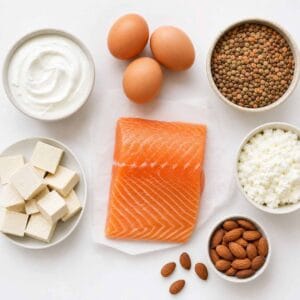
General recommendations for women over 50:
| Goal | Daily Protein Target |
|---|---|
| Maintain muscle mass | 1.0–1.2 g per kg body weight |
| Build or rebuild muscle | 1.2–1.6 g per kg body weight |
| Weight loss (preserve muscle) | 1.4–1.8 g per kg body weight |
| Active/athletic women | Up to 2.0 g per kg body weight |
For a woman weighing 68 kg (150 lbs), this translates to roughly 68–120 grams of protein per day, depending on goals.
Pro tip: Spread your protein intake across all meals rather than loading it at dinner. Research shows your muscles can only optimally use about 25–40 grams of protein per meal for muscle protein synthesis. So aim for 3–4 protein-rich meals throughout the day.
The 15 Best Protein Foods for Women Over 50
🐟 Animal Proteins
1. Salmon
Protein: ~25g per 3 oz (85g) serving
Salmon is one of the most powerful foods a woman over 50 can eat — and protein is just one reason. It’s loaded with omega-3 fatty acids (EPA and DHA), which reduce inflammation, support brain health, and have been shown to actually help preserve muscle mass in older adults. Omega-3s work synergistically with protein to trigger muscle protein synthesis.
Salmon also provides vitamin D, which declines significantly in women after menopause and is essential for calcium absorption and bone health.
Best ways to eat it: Baked, grilled, or pan-seared. Aim for 2–3 servings per week.
2. Eggs
Protein: ~6g per egg
Eggs are one of nature’s most complete protein sources, containing all nine essential amino acids. They’re particularly rich in leucine, the key amino acid that triggers muscle protein synthesis — critical for women fighting age-related muscle loss.
The yolk matters too. It contains vitamin D, B12, choline (essential for brain health), and healthy fats. Whole eggs are far superior to egg whites alone.
Best ways to eat them: Scrambled, poached, boiled, or in omelets. 1–2 eggs per day is well-supported by current research for healthy adults.
3. Greek Yogurt
Protein: ~17–20g per 6 oz (170g) serving (plain, full-fat)
Greek yogurt is a protein powerhouse that also delivers calcium and probiotics — making it particularly valuable for women over 50 who need bone support and gut health maintenance (which affects nutrient absorption and immune function).
Choose plain, full-fat versions and avoid flavored varieties loaded with sugar. Add berries and a drizzle of honey for natural sweetness.
Best ways to eat it: Breakfast bowl, smoothie base, post-workout snack, or as a sour cream substitute in cooking.
4. Chicken Breast
Protein: ~31g per 3.5 oz (100g) serving
Lean and versatile, chicken breast is one of the highest protein-per-calorie foods available. It’s low in saturated fat, widely available, easy to cook in bulk, and works in virtually any cuisine.
For women managing weight alongside muscle health, chicken breast offers an outstanding protein-to-calorie ratio.
Best ways to eat it: Baked, grilled, poached, or shredded into soups and salads. Batch cook on Sundays for the week ahead.
5. Cottage Cheese
Protein: ~25g per 1 cup (226g) serving
Cottage cheese is having a well-deserved renaissance — and for good reason. It’s high in casein protein, a slow-digesting protein that steadily releases amino acids over several hours. This makes it especially valuable as a bedtime snack, supporting overnight muscle repair and recovery.
It’s also rich in calcium and low in calories, making it ideal for women balancing weight management with muscle preservation.
Best ways to eat it: With fruit and nuts as a snack, blended into smoothies, or as a savory bowl with cucumber and tomato.
6. Tuna
Protein: ~25g per 3 oz (85g) serving
Canned tuna is one of the most affordable, accessible high-protein foods available. It’s lean, shelf-stable, and quick to prepare. Like salmon, it provides omega-3s — though in smaller amounts.
Opt for tuna packed in water and limit to 2–3 servings per week due to mercury content.
Best ways to eat it: Tuna salad with avocado mayo, tossed into pasta, or on whole grain crackers.
7. Turkey
Protein: ~29g per 3.5 oz (100g) serving
Turkey breast rivals chicken as a lean, high-protein option. It’s also a good source of selenium, a trace mineral that supports thyroid function — important for women whose thyroid health can shift after 50 — and zinc, which supports immune function and wound healing.
Best ways to eat it: Roasted, sliced into wraps, or used as a ground meat alternative.
🌱 Plant Proteins
8. Edamame (Soybeans)
Protein: ~17g per 1 cup (155g) cooked
Edamame is one of the few complete plant proteins — meaning it contains all nine essential amino acids. Soybeans are also rich in isoflavones, plant compounds that have been studied for their ability to modestly support bone density and ease some menopausal symptoms.
For decades there was concern about soy and breast cancer risk, but current consensus from major cancer organizations indicates that moderate consumption of whole soy foods is safe and likely beneficial for most women.
Best ways to eat it: Steamed as a snack, added to stir-fries, or tossed into grain bowls.
9. Lentils
Protein: ~18g per 1 cup (198g) cooked
Lentils are a nutritional superstar for women over 50. Beyond their impressive protein content, they deliver folate, iron, potassium, and fiber — all nutrients women over 50 need more of. The high fiber content also feeds beneficial gut bacteria and helps manage blood sugar.
Lentils are not a complete protein on their own, but when combined with grains (rice, bread, quinoa), they provide a full amino acid profile.
Best ways to eat them: Soups, dals, salads, or as a ground beef substitute in tacos and Bolognese.
10. Chickpeas
Protein: ~15g per 1 cup (164g) cooked
Chickpeas are one of the most versatile plant proteins and a staple in Mediterranean and Middle Eastern diets — both associated with longevity and reduced disease risk. They’re high in fiber, supporting digestive health and helping maintain healthy cholesterol levels.
Best ways to eat them: Hummus, roasted as a crunchy snack, in curries, or tossed into salads.
11. Quinoa
Protein: ~8g per 1 cup (185g) cooked
Unlike most grains, quinoa is a complete protein — it contains all essential amino acids. While the total protein amount is moderate, it makes quinoa a valuable base for bowls and salads, especially for women eating less meat.
It’s also gluten-free and rich in magnesium, a mineral many women over 50 are deficient in and that plays a role in muscle function and sleep quality.
Best ways to eat it: As a rice substitute, in Buddha bowls, or as a warm breakfast porridge.
12. Tofu
Protein: ~10g per ½ cup (126g) firm tofu
Tofu, made from condensed soy milk, is another complete plant protein. It absorbs flavors beautifully and can be prepared in dozens of ways. Calcium-set tofu is particularly valuable as a bone-supportive food, providing both protein and calcium in one package.
Best ways to eat it: Pan-fried, baked, in stir-fries, scrambled as an egg substitute, or blended into smoothies (silken tofu).
🥜 Nuts, Seeds & Dairy
13. Hemp Seeds
Protein: ~10g per 3 tablespoons (30g)
Hemp seeds punch well above their weight for such a small food. They’re one of the few plant sources that provide a perfect 3:1 ratio of omega-6 to omega-3 fatty acids and contain all essential amino acids. They’re incredibly easy to add to meals without changing the flavor.
Best ways to eat them: Sprinkled on yogurt, salads, oatmeal, or blended into smoothies.
14. Almonds
Protein: ~6g per 1 oz (28g)
Almonds provide protein alongside vitamin E, magnesium, calcium, and healthy monounsaturated fats — a combination particularly beneficial for heart and bone health in postmenopausal women. They’re also a satisfying snack that helps manage hunger between meals.
Best ways to eat them: As a handful snack, almond butter on whole grain toast, or chopped into salads and oatmeal.
15. Tempeh
Protein: ~19g per 3 oz (85g) serving
Tempeh is fermented soy — and the fermentation process makes its nutrients more bioavailable than regular tofu. It’s also a source of probiotics, supporting gut health, which becomes increasingly important for nutrient absorption after 50.
Tempeh has a nutty, hearty flavor and a firm texture that works beautifully as a meat substitute.
Best ways to eat it: Sliced and pan-fried, marinated and grilled, or crumbled into grain bowls and tacos.
Practical Tips: How to Hit Your Protein Goals Every Day
Getting enough protein doesn’t require complicated meal planning. Here’s how to make it work in real life:
Build a protein anchor at every meal. At breakfast, lunch, and dinner, ask yourself: “Where’s my protein?” Eggs at breakfast, Greek yogurt at a snack, chicken or lentils at lunch, salmon at dinner — and you’re already at 80–100g of protein for the day.
Prepare in batches. Cook a large quantity of chicken, lentils, or hard-boiled eggs at the start of the week. Having protein ready to grab means you’re less likely to default to low-protein convenience foods.
Don’t fear protein at breakfast. Most women front-load carbs at breakfast (cereal, toast, fruit) and save protein for dinner. Flipping this pattern — having a protein-rich breakfast — supports better blood sugar control, reduced hunger, and optimal muscle protein synthesis throughout the day.
Use protein as a snack strategy. Instead of crackers or chips, snack on cottage cheese, a boiled egg, Greek yogurt, edamame, or almonds. These options satisfy hunger more effectively and deliver sustained energy.
Combine plant proteins smartly. If you eat mostly plant-based foods, pair complementary proteins: rice with lentils, hummus with whole grain pita, or tofu with quinoa. You don’t need to combine them at the same meal — getting a variety throughout the day is sufficient.
Protein Timing: Does It Matter?
Emerging research suggests that protein timing may be nearly as important as total intake for women over 50.
Post-exercise protein is essential. Consuming 25–40g of protein within 1–2 hours after strength training maximizes muscle repair and growth. A Greek yogurt, eggs on toast, or a protein smoothie work well here.
Evening protein supports overnight recovery. Casein-rich foods like cottage cheese or Greek yogurt before bed provide a slow release of amino acids during sleep, when the body does much of its repair work.
Avoid skipping protein at any meal. Large gaps without protein (such as a low-protein breakfast followed by a protein-rich dinner) are less effective for muscle maintenance than distributing intake evenly across meals.
Should Women Over 50 Use Protein Supplements?
Whole food sources should always come first — they provide protein alongside vitamins, minerals, fiber, and other compounds that supplements can’t replicate. However, protein supplements can be a useful tool in specific situations:
- When appetite is low and hitting daily protein targets through food alone is difficult
- As a convenient post-workout option
- During travel or busy periods when meal prep isn’t practical
If you do use a supplement, whey protein isolate is the most researched and bioavailable option for muscle support. For plant-based alternatives, pea protein or soy protein are good choices — both have solid evidence for muscle protein synthesis.
Avoid protein powders with long ingredient lists, artificial sweeteners, or high sugar content.
Foods to Limit (They Compete With Your Protein Goals)
While there’s no need to completely eliminate any food group, some foods tend to crowd out protein and undermine your health goals after 50:
Refined carbohydrates and sugary foods — white bread, pastries, sugary cereals — offer calories with little protein, fiber, or micronutrients. They can spike blood sugar and contribute to inflammation, which accelerates muscle breakdown.
Excess alcohol — interferes with protein synthesis, disrupts sleep (essential for recovery and hormone balance), and contributes empty calories.
Ultra-processed snack foods — chips, crackers, packaged cookies — are calorie-dense and protein-poor, making it harder to hit your daily protein targets without exceeding calorie needs.
A Sample High-Protein Day for Women Over 50
Here’s what an optimal protein day might look like:
Breakfast: 2-egg omelet with spinach and feta + ½ cup Greek yogurt with berries Protein: ~30g
Mid-morning snack: 1 oz almonds + 1 hard-boiled egg Protein: ~12g
Lunch: Large salad with ½ cup chickpeas, 3 oz canned tuna, quinoa, cucumber, and olive oil dressing Protein: ~35g
Afternoon snack: ½ cup cottage cheese with cherry tomatoes Protein: ~14g
Dinner: 3.5 oz baked salmon with roasted vegetables and ½ cup lentils Protein: ~38g
Total daily protein: ~129g — ideal for a 68kg woman focused on muscle health and active aging.
The Bottom Line
Protein isn’t just a macronutrient — for women over 50, it’s a cornerstone of healthy aging. Getting enough of the right proteins supports your muscles against the losses that come with menopause and age, strengthens your bones against osteoporosis, keeps your metabolism firing, and gives you the energy and vitality to live fully.
The best protein foods for women over 50 include salmon, eggs, Greek yogurt, chicken, cottage cheese, lentils, chickpeas, edamame, tofu, and hemp seeds — a diverse mix of animal and plant sources that work together to cover all your nutritional bases.
You don’t need a complicated diet. You need a simple intention: at every meal, lead with protein.
Your body will thank you — now and for decades to come.
Frequently Asked Questions
How much protein do women over 50 need per day? Most nutrition researchers recommend 1.0–1.6 grams of protein per kilogram of body weight for women over 50 — significantly more than the standard 0.8 g/kg RDA. For a 150-pound woman, this translates to roughly 68–110 grams per day.
Is it too late to build muscle after 50? Not at all. Research consistently shows that women in their 50s, 60s, and beyond can build and maintain muscle with adequate protein intake and regular resistance training. The process is slower, but it absolutely works.
Are plant proteins as good as animal proteins for women over 50? Animal proteins tend to be more bioavailable and higher in leucine, making them slightly more efficient for muscle protein synthesis. However, a well-planned plant-based diet with diverse protein sources (legumes, soy, quinoa, hemp) can absolutely meet the needs of women over 50.
Can too much protein harm kidneys? For women with healthy kidneys, current research does not support the idea that high protein intake (up to 2g/kg/day) causes kidney damage. If you have existing kidney disease, consult your doctor for personalized guidance.
What’s the best protein for women over 50 to build muscle? Foods rich in leucine — eggs, dairy (especially Greek yogurt and cottage cheese), chicken, fish, and soy — are most effective for triggering muscle protein synthesis. Whey protein is the most studied supplement for this purpose.